Palomares Hills Lifestyle Guide: Amenities, Parks, and Views
If you are looking for a Castro Valley neighborhood that blends hillside scenery with everyday convenience, Palomares Hills deserves a closer look. Many buyers want more than square footage alone. They want places to walk, relax, gather, and enjoy the setting around them. This guide will show you what stands out about Palomares Hills, from amenities and parks to trails and view potential, so you can better picture daily life here. Let’s dive in.
Palomares Hills sits in the hills east of downtown Castro Valley, between Crow Canyon Road and I-580. Alameda County planning materials describe it as a hillside district with land near the clubhouse sloping toward a canyon, which helps explain the neighborhood’s elevated feel and open-space character.
That setting gives Palomares Hills a different atmosphere than a flatter suburban tract. As you move through the area, the terrain, street orientation, and nearby open space can shape everything from walking routes to the kinds of views certain homes may enjoy.
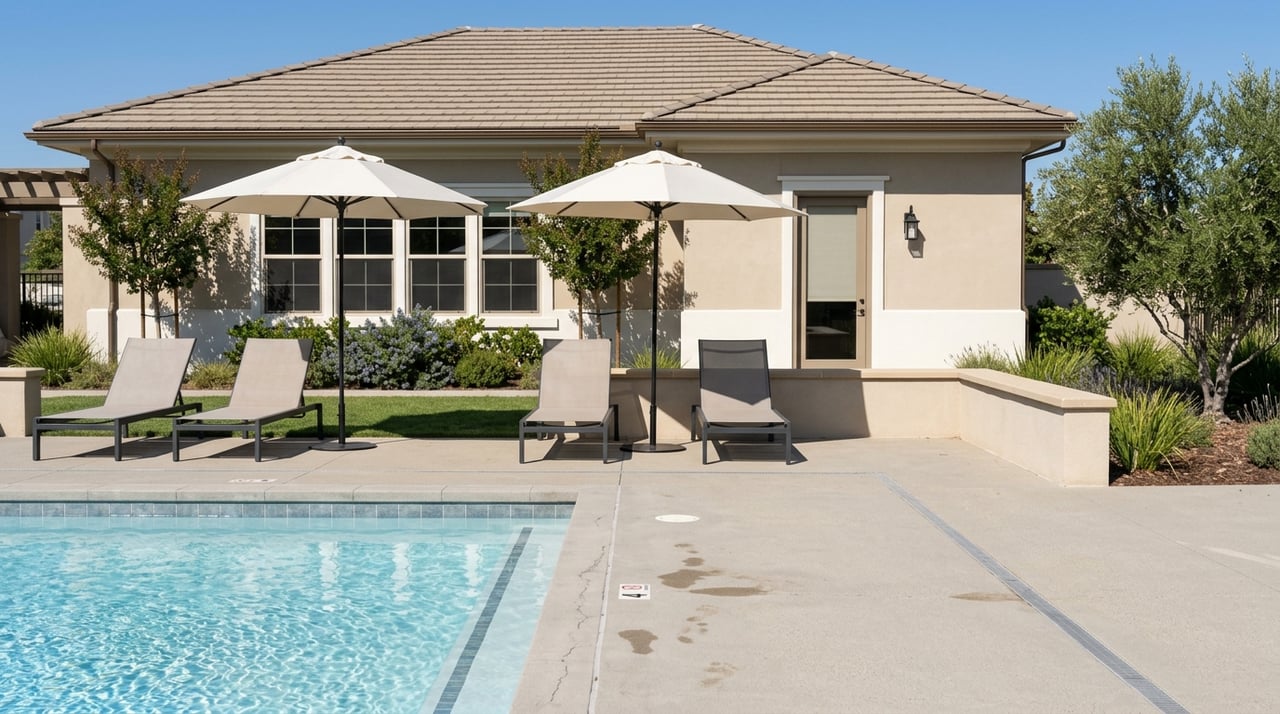
One of the biggest lifestyle draws in Palomares Hills is its shared amenity hub. County staff identify the clubhouse at 6811 Villareal Drive as a key neighborhood feature, with tennis courts, a swimming pool, and a community center building.
For many residents, that means you are not relying only on your own yard for recreation or gatherings. The setup supports a more connected routine, whether that looks like pool time on warm days, a casual tennis match, or community events at the clubhouse.
Shared amenities can make a neighborhood feel more usable day to day. In Palomares Hills, the clubhouse area gives residents a central place for recreation and social time within the planned development.
Based on the available amenities, common routines may include:
County materials also note coordination between local agencies and the Palomares Hills HOA on nearby public projects. That suggests the neighborhood has an active role in local planning conversations, which can matter if you value a community with ongoing civic involvement.
Beyond the HOA grounds, Palomares Hills Park is a major part of the neighborhood lifestyle. The park, located at 7050 Villareal Drive and managed by H.A.R.D., includes a wide range of facilities that support both active recreation and casual outdoor time.
According to H.A.R.D., the park includes:
This amenity mix makes the park useful for many kinds of plans. You might head there for a short play break, a picnic, a team sport, or a larger weekend gathering.
Alameda County describes Palomares Hills Park as primarily built for the local Palomares subcommunity but open to all of Castro Valley. That gives it an interesting role. It functions as a neighborhood gathering space while also serving the wider community.
For buyers, that often translates to more activity and more ways to use the space. It also means the park is not just a visual extra on a map. It is a practical part of how people spend time outdoors nearby.
Palomares Hills is appealing not only because of what sits inside the neighborhood, but also because of what surrounds it. The broader eastern Castro Valley hillside area connects to a larger open-space network with trails, recreation areas, and scenic ridgelines.
If outdoor access matters to you, this part of Castro Valley offers several notable nearby options.
Cull Canyon Regional Recreation Area adds another layer of outdoor use close to Palomares Hills. East Bay Regional Park District information notes a seasonal swim facility, reservable picnic areas, hiking access, and a connection to the Chabot-to-Garin Regional Trail.
That makes Cull Canyon a useful option when you want a bigger park outing beyond the neighborhood itself. It is also worth knowing that the swim facility can reach capacity early on busy weekends and holidays, especially in summer.
For longer outings, Lake Chabot and Anthony Chabot expand the trail network in a big way. Lake Chabot offers more than 20 miles of hiking trails and connects to additional trails in Anthony Chabot.
Anthony Chabot includes 70 miles of hiking, riding, and bicycling trails, plus campground options and access to the East Bay Skyline National Trail. If you enjoy having serious trail mileage within reach, this is one of the strongest lifestyle advantages of the broader area.
Five Canyons Open Space adds even more variety nearby. East Bay Regional Park District describes it as having more than 300 acres and five miles of trails, including a Bay Area Ridge Trail segment.
The trails there move through shady canyons and scenic ridgelines, with connections north toward Cull Canyon and west toward Don Castro. That reinforces an important point about Palomares Hills. The neighborhood is tied to a connected hillside recreation network, not just a single local park.
Views are a meaningful part of the Palomares Hills identity. The hillside setting, nearby canyon terrain, and access to ridge-adjacent areas all support the idea that outlook and orientation matter here.
East Bay trail sources for the surrounding hills highlight panoramic city and bay views. In Palomares Hills, current listing examples also frequently mention canyon, bay, and valley views, which suggests that many buyers specifically look for homes with stronger visual exposure.
Not every home in Palomares Hills will have the same view experience. In a hillside neighborhood, factors like lot placement, elevation, and rear-facing exposure can make a real difference.
That is one reason buyers should look beyond the neighborhood name alone. Two homes in the same community can offer very different outdoor settings, privacy levels, and sightlines depending on where they sit.
Palomares Hills is larger and more layered than some buyers first assume. Public HOA data describes it as a single-family home community with 1,605 units and a 1981 build date, which points to a substantial master-planned setting rather than a small isolated enclave.
At the same time, public listing data shows both detached single-family homes and townhomes in Palomares Hills. If you are starting your search here, it helps to know that the neighborhood can include more than one housing style.
Another practical point is that Palomares Hills appears to include both an umbrella community association and village-level associations. That can affect dues, rules, and amenity details from one address to another.
Before you make assumptions about access or costs, it is smart to verify:
This step matters in many neighborhoods, but especially in a large hillside community where tract identity can shape the ownership experience.
When you put the pieces together, Palomares Hills offers a lifestyle shaped by topography, recreation, and shared amenities. It is a place where the clubhouse, neighborhood park, and nearby trail systems can all become part of your regular rhythm.
For some people, that means morning walks, weekend park time, and easy access to broader East Bay open space. For others, the draw is the hillside environment itself, with its more elevated setting and the possibility of canyon, valley, or bay-oriented views.
If you are comparing Castro Valley neighborhoods, Palomares Hills stands out for offering both a defined community structure and strong access to outdoor recreation. That combination is a big reason it stays on many buyers’ short lists.
If you want help comparing Palomares Hills with other Castro Valley neighborhoods, or you want to understand how a specific address fits into the community, the team at Evolve Real Estate can help you make sense of the details with local insight and clear guidance.
Stay up to date on the latest real estate trends.
You’ve got questions and we can’t wait to answer them.