Castro Valley's Median Home Price Is Hiding Four Different Markets
Search "Castro Valley homes for sale" and you'll get one number back: a median hovering around $1.14 to $1.2 million as of August 2026, depending on whether you're looking at closed sales or active listings. That number is real. It's also nearly useless if you're trying to figure out what your money buys, because it's an average of markets that don't compete with each other.
Recent citywide value estimates put the actual spread at $409,406 to $4,424,861 across Castro Valley's roughly 932 residential properties. That's not a rounding error. That's four or five distinct housing products getting mashed into a single median because they all share a zip code.
If you're comparing neighborhoods here, the number that matters isn't the citywide median. It's which of Castro Valley's built-form tiers you're actually shopping in, because the tier, not the zip code, is what sets your price.
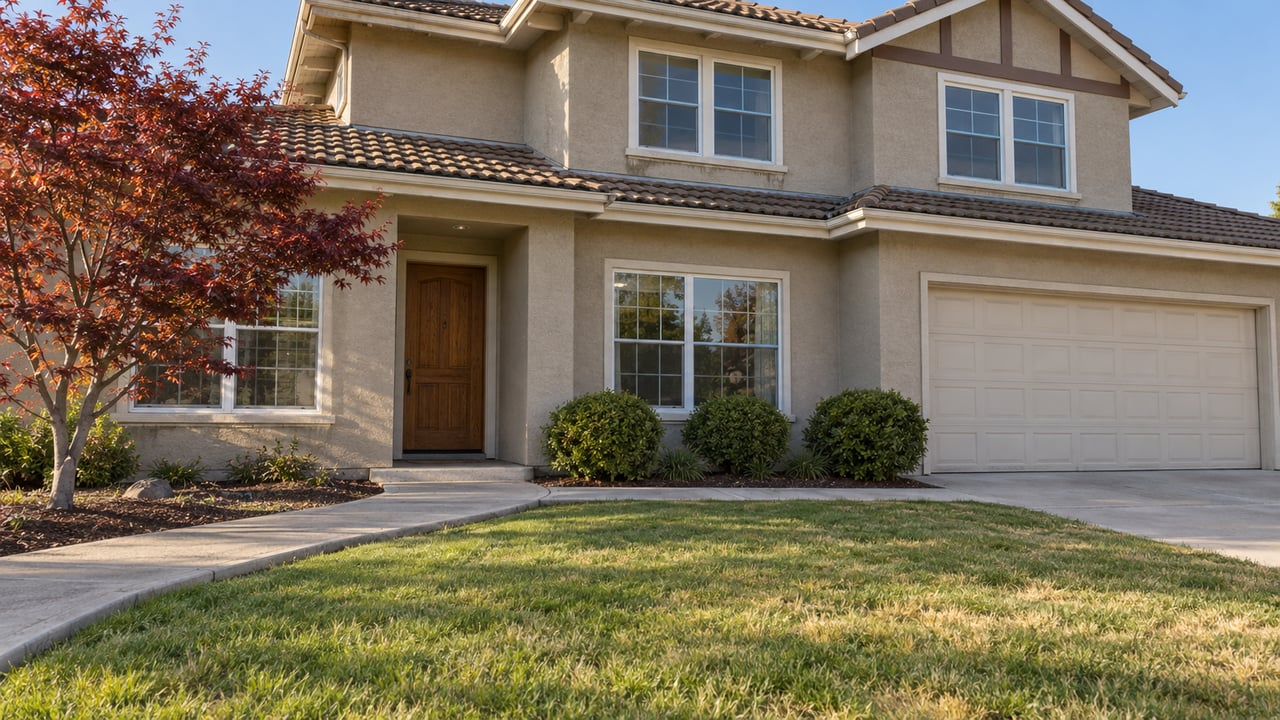
Walk through Columbia, and every home you pass is detached. Not "mostly detached." All 541 of them. The neighborhood sits at the northern edge of town, bordered by Heyer Avenue, Cull Canyon Road, and Redwood Road, and it was built out mostly in the 1980s on lots running from 0.17 to 1.79 acres. Many backs directly onto East Bay Regional Park District open space, which means no rear neighbors, just canyons where deer and wild turkeys move through. Single-family homes here run $995,000 to $2 million, and the quarterly HOA fee is $150 to $220, low for what it buys: a private swim complex with a Jacuzzi and spa, a neighborhood park with its own pool, playground, and basketball court, and a straight three-minute drive to Cull Canyon Regional Recreation Area's swim lagoon.
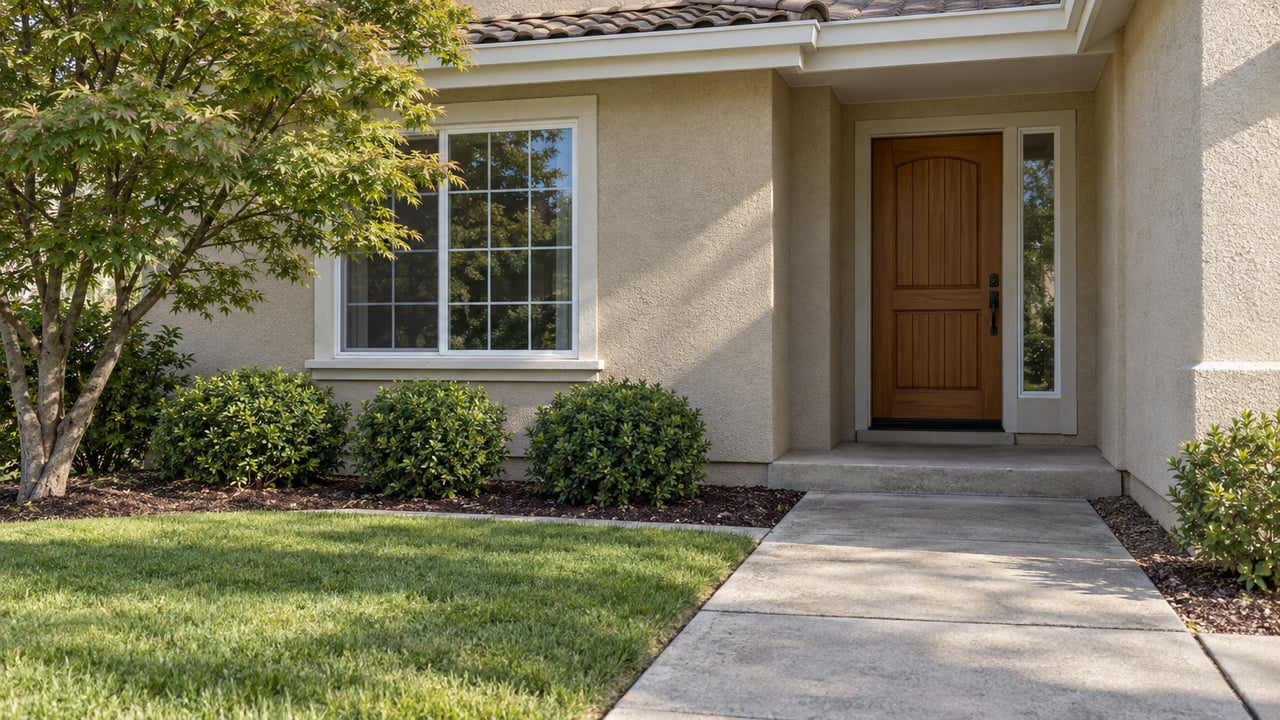
Now walk through Five Canyons, a few minutes south, and the product mix changes entirely. Some streets are townhomes running $800,000 to $1 million. Others are what local listings describe as mini-mansions, pushing $1.5 to $2 million for a single-family home with Bay views. It's the same neighborhood name attached to two different assets, and the median for "Five Canyons" blends them into a number that doesn't describe either one accurately.
Palomares Hills, in the northeast corner near Crow Canyon and Eden Canyon roads, does something similar but at a narrower band. It's one of the only subdivisions in the area that mixes single-family homes with townhomes, where its neighbors kept them separate. Townhomes there run $875,000 to $1.57 million for 1,300 to 2,300 square feet.
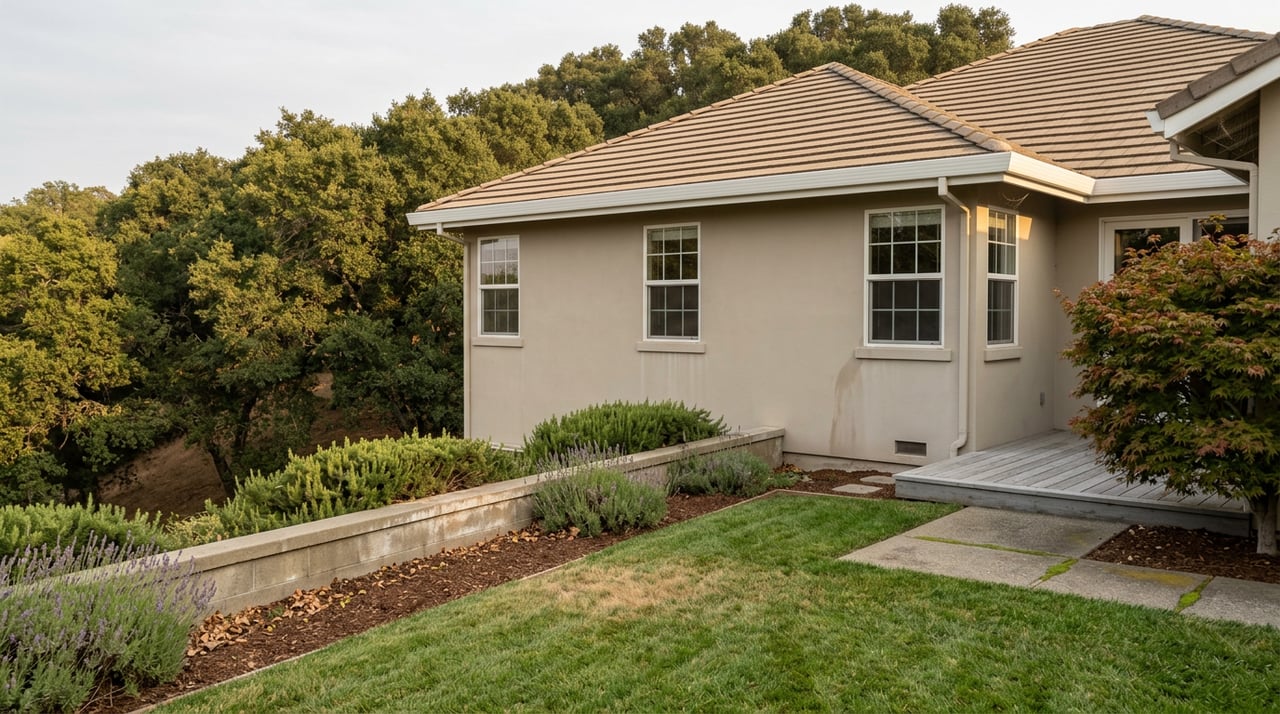
Then there's Briar Ridge, east of Cull Canyon Regional Recreation Area, which splits by elevation instead of block. Near the entrance, two- and three-bedroom townhomes with enclosed garages run $600,000 to $700,000, a genuine entry point for first-time buyers. Drive further up the same hill and the housing shifts to single-family homes near $1.2 million on larger lots. One neighborhood name, one street, two markets separated by a few hundred feet of elevation gain.
| Neighborhood | Housing mix | Typical price range | Notable amenity |
|---|---|---|---|
| Columbia | Single-family only | $995K–$2M | Private swim complex, no-rear-neighbor canyon lots |
| Five Canyons | Townhome to single-family | $800K–$2M | 300-acre open space, Bay Area Ridge Trail |
| Palomares Hills | Townhome-heavy, some single-family | $875K–$1.57M | Jensen Ranch Elementary (National Blue Ribbon) |
| Briar Ridge | Townhome at entrance, single-family up-slope | $600K–$1.2M | Adjacent to Cull Canyon Regional Recreation Area |
Every one of these sits inside the same citywide median. None of them is "the Castro Valley market." They're four markets wearing one label.
The obvious explanation for Columbia's price floor is proximity to good schools or the view lots, and both play a role. But the more durable reason is structural, not scenic: Columbia never allowed attached housing. That decision, made by whoever platted the subdivision decades ago, means every square foot of land value in Columbia converts into house and yard rather than shared walls. A buyer there isn't paying for square footage alone. They're paying for the absence of a townhome next door that could exist but doesn't, by design.
Compare that to Five Canyons, where a $2 million single-family home and an $800,000 townhome sit inside the same recreation center's service area and the same school boundaries. The gap between them isn't location. It's whether the unit you're buying has its own lot line on all four sides.
This matters most when you're using "median price" to gut-check a listing. A $1.7 million single-family home in Columbia and a $1.7 million single-family home in Five Canyons are genuinely comparable. A $1.7 million home in Columbia and an $875,000 townhome in Palomares Hills are not, even though both technically sold in "Castro Valley" this year.
There's a second friction point worth flagging before you write an offer. Five Canyons sits on the east side of Castro Valley Boulevard and south of Interstate 580, and that position means school assignment isn't automatic. Local guidance for the neighborhood explicitly tells buyers to check whether a given address falls under Castro Valley Unified or Hayward Unified before assuming either one. This isn't a detail most listing photos surface. Anyone treating "Five Canyons" as a single school-district guarantee should confirm the specific parcel's assignment first, because the boundary runs through the neighborhood rather than around it.
A Homes.com neighborhood guide quotes Leslie Peterson, who works this market daily as part of Evolve Real Estate, saying homes there "typically sell within a week." That tracks with what the current data shows across Castro Valley broadly. Homes were receiving multiple offers and moving in under two weeks, based on sale figures for the three months ending in June 2026. The guide also quotes Peterson describing the hillier pockets: "Some of the homes have really pretty views of the Bay and surrounding hillsides."
That combination, fast pace plus view premium, means the neighborhoods with the steepest topography and the most detached lots aren't just pricier. They're also harder to catch on the way down if prices soften, because turnover is thin and inventory doesn't sit long enough to create real negotiating room.
If you're using the citywide median as your anchor, stop. Anchor instead to the product type you actually want:
None of these decisions show up in a citywide median. They show up when you walk the actual boundary lines, and that's the kind of comparison worth doing with someone who tracks these pockets weekly rather than quarterly.
Is the Castro Valley median price rising or falling right now? Recent three-month sale data through June 2026 showed the median sale price down about 5 percent year over year, while price per square foot was up slightly over the same period. Active listing data for August 2026 showed median list prices also down on a month-over-month and year-over-year basis. The direction depends on which metric and which window you're reading, which is another reason a single citywide number tells you less than it seems to.
Do all Castro Valley neighborhoods share the same HOA structure? No. Columbia's HOA runs $150 to $220 per quarter and covers a private pool, spa, and neighborhood park. Five Canyons and Palomares Hills have their own separate recreation centers and fee structures. Confirm the specific HOA terms for any property before assuming they match a neighboring subdivision.
Why should I double check school assignment in Five Canyons? The neighborhood sits on the east side of Castro Valley Boulevard and south of Interstate 580, and local guidance for the area specifically advises buyers to verify whether a home falls under Castro Valley Unified or Hayward Unified before assuming either one. Confirm the assigned school for any specific address rather than assuming based on the neighborhood name.
If you're weighing which of these pockets actually fits your budget and your reason for moving, Evolve Real Estate tracks these boundary lines block by block. Get Your Quote and we'll walk you through what your number really buys.
This article is general information, not legal, tax or financial advice. Consult a qualified professional about your situation.
Stay up to date on the latest real estate trends.
You’ve got questions and we can’t wait to answer them.